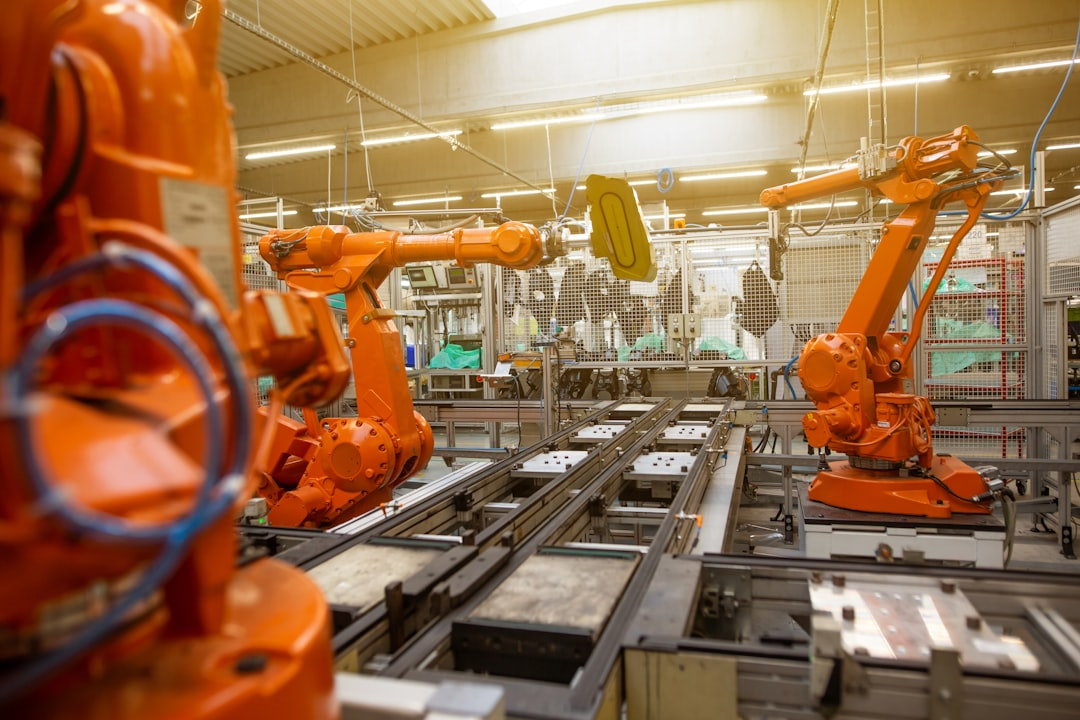
The best manufacturing facilities in the world are not defined by their machines.
They are defined by who controls the floor.
A factory without authority over its own production process is just expensive equipment waiting to malfunction. The machines can be state-of-the-art. The logistics can be precisely calibrated. But if no one holds authority over what enters the production line, what specifications are approved, what work is permitted to begin, what constitutes acceptable output, the system will eventually produce defects at scale. Not occasionally. Systematically.
This is the problem with every autonomous software development system I have evaluated, including earlier versions of my own. The agents are capable. The orchestration is sophisticated. But without a sovereign authority enforcing discipline at the moment a session begins, not after the first defect appears, not after the first scope deviation is detected, the system drifts. It produces output that looks like software and behaves like liability.
Qappa is not an assistant.
Qappa is a Product Owner. The distinction is not semantic.
An assistant retrieves information and executes instructions. A Product Owner holds authority over scope, specification, and quality. A Product Owner can say no. A Product Owner’s approval is required before implementation begins: not as a formality, but as a structural gate.
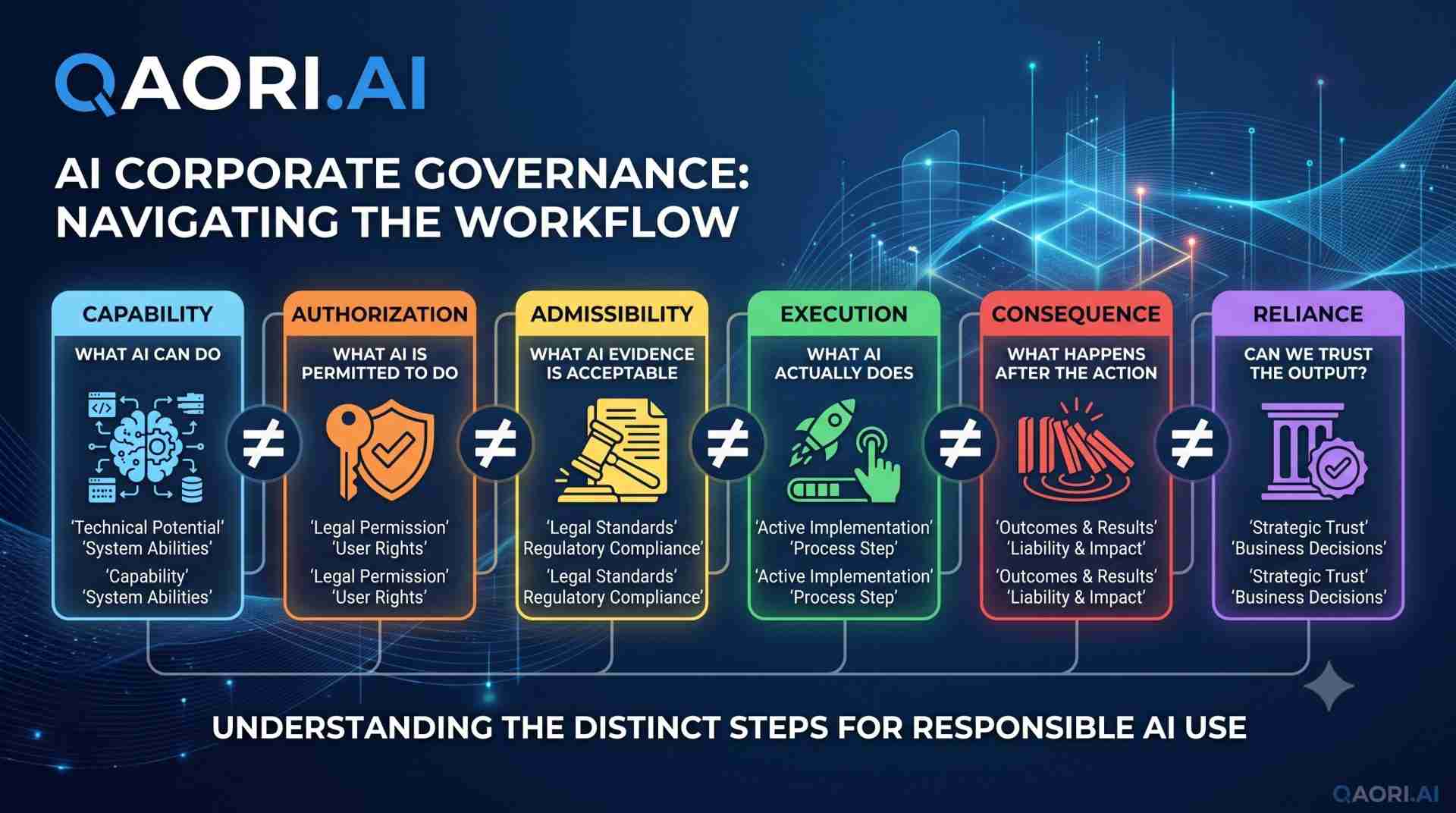
Qappa’s role in the QAPAF factory is precisely this. No implementation begins without an approved specification. No agent operates outside its defined scope. Every session starts from a known, governed state. These are not guidelines that agents are encouraged to follow. They are constraints that define what the session is permitted to do.
The key word is “starts.” Most AI orchestration systems apply rules reactively, when something goes wrong, a check fires. A quality gate triggers. A review step catches the defect. This is useful. It is not sufficient. Qappa enforces discipline proactively. Before the first line of code is written. Before the first task is dispatched. Before the factory floor activates.
In an article I wrote some time ago about what I called offshore development 2.0, I made the observation that when you replace human developers with AI agents, the failure mode does not change, it accelerates. The pattern of scope drift, incomplete specifications, and unchecked output that destroyed offshore engagements in the 2000s and 2010s is the same pattern that undermines autonomous AI development today. The agent changed. The failure mode did not.
The fix to that failure mode in human teams was a strong, credentialed Product Owner at the top of a structured, gate-driven process, someone with the authority and the judgment to hold the line on quality regardless of schedule pressure. QAPAF’s fix is the same. Qappa is that Product Owner.
We recently completed an architectural upgrade to QAPAF.
I will describe it in terms of outcome, not mechanism, because the mechanism is ours.
Every agent in the factory now begins every session by reading its rules. Not because we remind it to. Because the rules are part of what it is before it does anything else. An agent that has read its behavioral mandate at session start is a different instrument than one operating from accumulated context and inferred expectations. The difference between an agent that drifts and one that consistently ships is not the underlying model. It is what the model reads first.
We also formalized, as a structural constraint, not a cultural norm, the principle that no code is written before a specification is approved. This sounds obvious. It is not practiced, at scale, consistently, under pressure. The pressure to produce visible output is the oldest enemy of quality in software development, human or machine. Encoding the resistance to that pressure as a behavioral constraint rather than a project management guideline is a different kind of discipline. It is the kind that holds when no one is watching.
The other patterns we formalized in this upgrade are ours to keep for now. What I can say is that the result makes QAPAF’s existing 12 quality gates more effective, not because the gates changed, but because what arrives at them is cleaner, better-specified, and produced by agents operating from a known behavioral baseline.
The honest competitive analysis.
Someone with enough time, the right background, and access to the same foundational tools could build a comparable factory. The underlying technology is not secret. Some of the patterns are documented in repositories and papers I have read. I am not claiming that what we have built is mystically unreproducible.
What is hard to copy is the combination.
Qappa as sovereign authority at the factory door. QAPAF as a governed, multi-agent, multi-LLM production system with 12 successive quality gates. A behavioral layer that shapes agent conduct before problems arise. A governance architecture, including Hard-Stop gates, CARE framework compliance, and EU AI Act alignment, that was built into the structure from the beginning, not added to an existing system after the fact. And underneath all of it, forty years of PM/PO judgment as the design principle.
The moat is not the LLMs. This is worth stating plainly. We run multiple models and assign them to task types based on their demonstrated strengths. We switch between them. They are interchangeable by design. Any organization that has built its competitive advantage around a specific model is one model release away from losing it.
The moat is the organizational model encoded in software. And organizational models take decades to develop, not months.
I have managed large outsourced development teams since before most current AI practitioners were in school. I know precisely where those teams failed, where the specs were incomplete, where the POs lacked authority, where the process looked rigorous on a slide and collapsed under delivery pressure. I know the organizational structures that prevented those failures when they were in place. I built QAPAF by encoding that knowledge into a machine organization.
That encoding is not a technical artifact. It is forty years of judgment translated into constraint. You cannot copy it by reading a GitHub repository.
A measured close.
Are Qappa and QAPAF unbeatable? No system is unbeatable. Markets change. Models improve. Competitors learn.
But a governed factory with a sovereign Product Owner at its front door, a behavioral layer that shapes agent conduct before any work begins, and a 12-gate quality architecture designed from the ground up on three decades of hard-won PM experience, that is not a prototype. It is not a demo. And it is not easy to replicate.
The question our clients ask is not “can you build software autonomously?” That question has been answered. They ask: “can we trust the output?”
Qappa’s answer is structural. The factory was designed to be trusted.