






The Internet was built four Times without a Governance Layer.
InterTaG is the fifth. The identity, accountability, knowledge, and governance infrastructure the internet was built without, now made technically possible and civilizationally urgent.
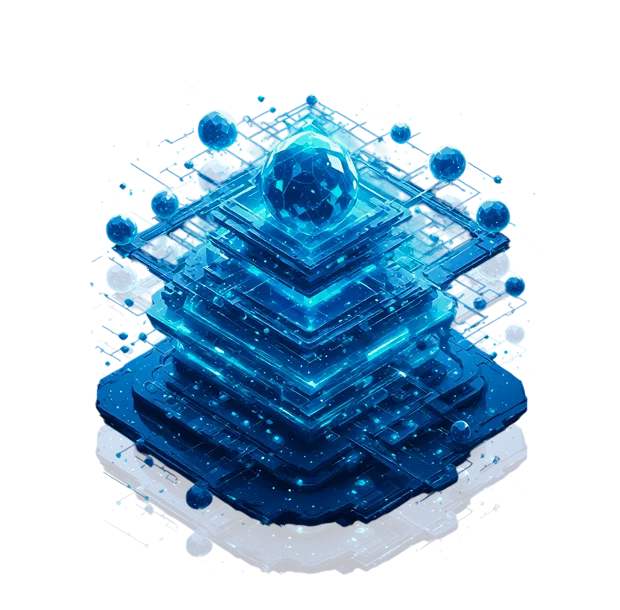
Every Layer of the Internet was built for Capability. None was built for Governance.
The Internet of Information made knowledge flow freely, including disinformation, exploitation, and harm. The Internet of Assets made ownership programmable, then captured by speculation. The Internet of Energy proposed distributed power without the trust infrastructure to make it fair. The Internet of Agentic Systems arrived at civilizational velocity with no governance layer at all.
Each time, the architecture was built. Each time, the governance layer was absent. Each time, the harm fell on the most vulnerable.
InterTaG is the fifth internet: the layer that makes information trustworthy, assets equitable, agents governable, and participation safe for everyone who has been excluded from it. It is not a new application or a new platform in the conventional sense. It is the connective tissue that must exist beneath all the others for any of them to be sustainable.
Six Structural Commitments. None of them are Features.
Features can be removed. Structural commitments are load-bearing walls. Remove them and the building falls.
Governance as architecture, not policy
AI governance to date has produced speed limit signs. InterTaG produces speed governors. Every governance constraint is enforced at the architecture level, before harm, not detected after it. The 48 controls of the AIUC-1 framework map simultaneously to the EU AI Act, ISO 42001, NIST AI RMF, MITRE ATLAS, and OWASP Agentic Top 10.
Identity without surveillance
The Janus Identity Bridge holds two requirements simultaneously: a user is verifiable toward the regulator and pseudonymous toward the deployer. These faces are cryptographically separated. One cannot be derived from the other without a governed, consented, and auditable act of unmasking. A breach of the platform does not yield an identity database.
Structural protection for vulnerable populations
Children's safety is enforced through three independent layers, any one of which blocks harmful content before delivery. Child data lives in a cryptographically isolated partition: a breach of the primary system exposes zero information about minor users. Protections span six simultaneous jurisdictions, applying the most protective standard where frameworks conflict.
Knowledge transmission before it retires
The Alter is the vessel through which expert knowledge becomes transmissible without being extractable. The master craftsperson, the specialist retiring after forty years, the institutional knowledge that exists in no document and survives no departure: all of it can be encoded, governed, and made permanently accessible in the voice of the person who holds it.
Universal conversational access
The Unified Flow Interface converts every process that currently requires a web form into an Alter-mediated conversation. The user speaks or types in the natural language of their choice. The platform operates natively in English, French, German, Japanese, and Dutch. The digital exclusion that web forms enforce by design is resolved by architecture.
Governance infrastructure, not a compliant platform
A compliant platform meets regulatory requirements. A compliance infrastructure provides the substrate that makes regulatory requirements enforceable, auditable, and legible to regulators, deployers, and civil society simultaneously. The Qaori AIUC-1 framework is the first publicly available compliance report of its kind, machine- readable and updated continuously.
Less than five percent of the world uses AI with any regularity.
This is not a market problem. It is a structural one. The barriers are not technical: the models exist, the computing infrastructure exists. The barrier is that every major AI platform requires a payment method, an account, and enough familiarity with consumer software to navigate onboarding. The free tier, when it exists, is a conversion funnel, not a commitment.
The result is that the most capable tools in the history of information technology are available to those who already have the most.
Qaori’s commitment to universal access is structural.
Every registered user receives 100,000 LLM tokens per month at no cost. No payment card required. No upsell path. No time-limited trial. For most use cases, including conversational information access, Alter-mediated service navigation, knowledge transmission, companionship for isolated adults, tutoring, and cooperative administration, 100,000 tokens per month is enough for genuine daily utility.
The free access commitment is not a marketing offer. No venture-backed platform can sustain it: a platform optimized to convert free users to paying subscribers cannot hold this position without destroying the model that funds it. The cooperative ownership structure removes the incentive to monetize it away. Cooperative ownership is not incidental to the access commitment. It is what makes the access commitment durable.
“Access to safe, governed AI is not a consumer product. It is a public good, and it should be provided as one.”
Ten million cooperatives. One billion workers. One platform that is structurally one of their own.
There are approximately ten million cooperatives operating worldwide. One billion people work within them. The cooperative movement has institutional infrastructure (federations, development banks, advocacy bodies, training networks) that has operated across generations and that is acutely sensitive to whether the tools it adopts are structurally aligned with its principles or merely claiming to be.
Every cooperative in the world receives 100,000 free LLM tokens per month. No cost to join. No cost to begin. The cooperative federations become the distribution channel not because they are paid to be, but because the platform is one of their own.
No venture-backed platform can match this offer without destroying its own business model. This is not a growth strategy. It is a distribution model that compounds through institutional loyalty rather than advertising spend, and that is architecturally unavailable to any competitor whose founding incentive is extraction.
Built by one person, over ten years, without compromise.
Rosho Hopp spent fifteen years as a guilded apprentice in the European organ-building tradition. He then spent forty years in product management across industries, languages, and continents, working in four of them. He has six sons. He built the Qaori platform alone, without a technical co-founder or venture funding, from Yokohama, Japan.
Japan’s tradition of monozukuri (the art of making things), with its emphasis on craft, precision, and the patient transmission of knowledge across generations, is the cultural substrate in which this project found its form.
The founding reason was not a market opportunity. It was parenthood. His children were entering an internet he knew to be ungoverned, extractive, and structurally indifferent to the harm it caused to the young and the vulnerable. He refused to accept that the choice between participation and safety was permanent. Architecture is the answer to refusal.
His vision, stated plainly: he builds the toolbox for the next generations, for them to create their own best possible world. The world that will come when the current system has failed.
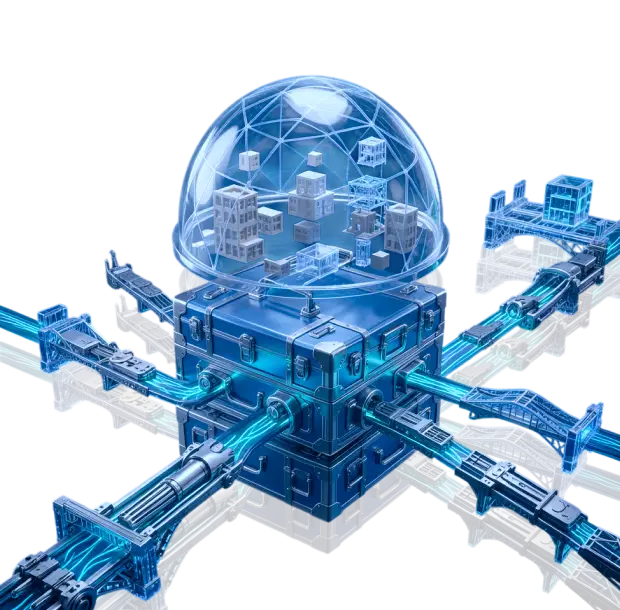
The architecture is complete. The platform is approaching launch.
184 structural epics. More than one million lines of code. 72% AIUC-1 compliance across five international standards, with a target of 90% or more by Q4 2026. The cooperative is legally established in Estonia. The autonomous factory (QAPAF) is operational and building the platform itself under full governance constraints.
The platform is pre-launch. The people who will matter most to this project are those who understand it before the market does.
Complete
Architecture, cooperative structure, governance framework, autonomous factory, regulatory jurisdiction framework (EU, Japan, UK, US, Australia).
Approaching launch
Qaori Care (dementia companionship), Banking Compliance SME Bundle, UFI deployment platform.
Requiring partnership
Sentinel hardware appliance, Africa regional deployment (qaori.africa), Qammy supervised AI for young learners.
This is not a funding request. It is an introduction.
The right partners for a project of this kind are not found after launch announcements. They are found before them: people and institutions with the patience to understand what is being built before the market confirms it.
The immediate need is €250,000 and a small team of two or three people to move from architectural completion to launch. Not a series round. Not a structured grant. One person or institution with the patience to recognize what has been built over ten years and the resources to fund the team that brings it into the world.
As the platform launches and milestones accumulate, four programs will open for formal partnership: EU AI Act compliance completion, supervised AI for young learners at no cost, the Sentinel hardware governance appliance, and Africa regional deployment. Each is independently fundable. Each is a public good.
The governance layer the internet never had.
InterTaG is a thirty-year build. Not a product launch. Not a market entry. A generation-spanning construction of infrastructure whose value compounds slowly, steadily, and with a permanence the extractive technology economy does not produce and cannot preserve.