






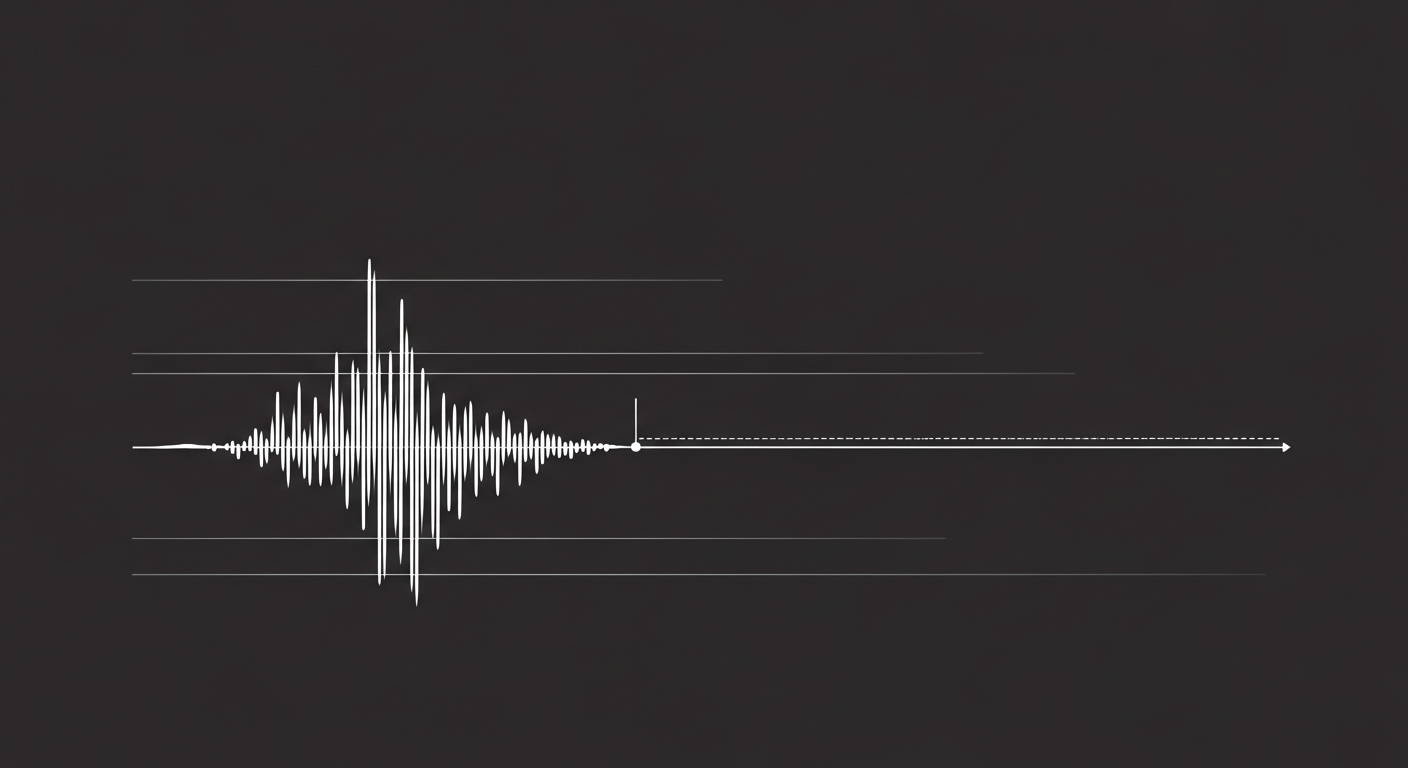
Governance drift is not a failure mode. It is a natural property of any system that changes over time. The fourth law of Universal Tebiki converts drift from an invisible accumulation into a measurable, governable, time-series signal.
Entropy: The Fourth Law of Universal Tebiki
The first three laws of Universal Tebiki, Purpose, Values, and Constraints, describe a system in a declared state. They say: this is what the actor is for, this is how it must prioritize, and these are the explicit boundaries it cannot cross. Together, they constitute the stable-state governance description of any actor in the system.
The fourth law begins with a fact about that stable state: it will not remain stable.
Not because the governance framework is poorly designed. Not because the actors are poorly managed. Because every system that takes actions and exists in time changes over time. Personnel changes. Operating context changes. The external environment changes. New capabilities become available. Old assumptions become false. And as each of these changes occurs, the gap between the declared state and the actual state widens incrementally, without any individual actor necessarily doing anything wrong.
This gap is entropy. The fourth law of Universal Tebiki, Entropy, is the set of mechanisms that measure this gap, track it on a timeline, and trigger governance responses when it exceeds a threshold.
Why Entropy Is Not a Problem to Be Solved
The standard governance response to entropy is prevention: enforce the framework more rigorously, add more reviews, and impose more sign-off requirements. This response misunderstands the nature of the problem and reliably produces worse governance, not better.
Entropy in complex systems is not preventable by enforcement intensity. Rudolf Clausius demonstrated in 1865 that in any natural process, total entropy increases unless energy is continuously invested to hold it back. The same principle applies to governance systems. They do not drift toward disorder as a matter of probability. They are pulled toward it as a matter of physics. Any governance framework that treats entropy as a failure mode to be prevented by better enforcement will find that more rigorous enforcement of a drifting framework produces more confident enforcement of the wrong state. That is not better governance. It is a faster compounding of the problem.
Universal Tebiki treats entropy differently. In UT, entropy is not a failure mode. It is a signal. Specifically, it is the signal that alerts the governance system that the gap between the declared state and the actual state has reached a threshold requiring a governance response. The response may be to update the declared state (revise the Purpose, Values, or Constraints to reflect what has actually changed), or to correct the actual state (reverse changes that have occurred without proper governance authorization). The choice between these responses is itself a governance decision. Entropy makes that decision necessary and visible. It does not make it.
The crucial implication is that change is not opposed by Universal Tebiki. Change is expected. It is welcomed. What Universal Tebiki opposes is uncontrolled change: change that accumulates without measurement, visibility, or the governance responses that legitimate change requires.
The Entropy Quotient
The Entropy Quotient (EQ) is the numeric instrument through which Universal Tebiki measures governance drift. It is a score, calculated per actor, that represents the gap between the actor’s current actual state and its most recent declared state (the combination of its declared Purpose, Values, and Constraints).
The EQ is calculated on three dimensions.
The first dimension is behavioral drift: the degree to which the actor’s recent actions fall outside the domain of its declared Purpose, or are inconsistent with its declared Values, or have crossed declared Constraint thresholds without recorded authorization. Behavioral drift is calculated from the actor’s evidence record: the stream of documented actions and decisions from which the governance system can reconstruct what the actor has actually been doing.
The second dimension is structural drift: the degree to which the actor’s operating context has changed relative to the assumptions embedded in its declared state. Personnel changes, tool updates, capability extensions, and workflow expansions all contribute to structural drift. Structural drift is calculated by comparing the governance registry’s map of the actor’s context (its ontology node) with the context that was current when the declared state was last validated.
The third dimension is declaration lag: the elapsed time since the declared state was last reviewed and validated against the current operating context. A declared state that has not been reviewed in twelve months in a rapidly changing environment has a high declaration lag, regardless of whether behavioral or structural drift is visible. The lag represents the risk that drift has occurred and has not yet been detected.
These three dimensions combine into a composite EQ score on a normalized scale from 0.0 (no detected drift) to 1.0 (severe drift across all dimensions). The score is time-stamped and tracked as a time series, not as a point-in-time measurement. The trend of the EQ is as important as its current value. A score of 0.3 that has been stable for six months is a different governance situation than a score of 0.3 that has increased from 0.1 in two months.
The Timeline and the Governance Response
The EQ threshold triggers a mandatory governance response when crossed. In Universal Tebiki, three threshold levels are defined by default, adjustable through gremium decision.
A green status (EQ below 0.2) indicates that the declared state remains an accurate description of the actor. No action is required beyond standard monitoring.
An amber status (EQ between 0.2 and 0.5) indicates that drift has been detected at a level that warrants review. The owning gremium is notified. A review is scheduled within a defined window. The review may result in a declared state update, a correction of the actual state, or a documented decision that the observed drift is acceptable and the threshold for this actor should be adjusted.
A red status (EQ above 0.5) indicates that the drift is severe enough to constitute a governance event. Actions in the affected domain are restricted or escalated until the governance response is completed. The owning gremium is convened. The options are the same as at Amber, but the urgency is higher, and the restriction on action is automatic.
The timeline dimension of the EQ is what distinguishes Universal Tebiki’s approach from point-in-time governance audits. An annual governance audit catches drift that has accumulated over twelve months. A monthly review catches drift at the monthly level. A continuously calculated EQ catches drift as it occurs and generates a response proportional to the rate of accumulation, not just the magnitude at the moment of the audit.
A score increasing at 0.05 per month will cross the amber threshold in two months if the rate continues. That forecast is visible in the time series. The governance response can be initiated before the threshold is crossed, which is a qualitatively different capability than detecting that it has been crossed after the fact.
Voluntary Change and the EQ
When an actor’s Purpose, Values, or Constraints are deliberately revised through the gremium process, the declared state is updated. The new declared state becomes the reference point for the EQ calculation. The revision does not reset the EQ to zero. It sets a new baseline.
This is the mechanism that makes Universal Tebiki entropy-positive in the Entropositive sense: welcoming of deliberate, governed change while maintaining continuous measurement of uncontrolled drift. An actor whose governance framework has been revised twenty times through a proper governance process is not a governance concern. Its EQ will accurately reflect its current declared state because the declared state has been kept up to date with the actual state. An actor whose governance framework has not been revised in three years but whose operating context has changed significantly will have a high EQ, regardless of whether anyone intended the drift.
This distinction, between deliberate change and uncontrolled drift, is the practical achievement of the fourth law. It reframes the governance question from “has this actor changed?” (which, in complex systems, always has the answer “yes”) to “has this actor’s change been governed?” The EQ answers that question numerically, continuously, and with a time series that supports both forecasting and retrospective evaluation.
Entropy as the Lowest Common Denominator
Universal Tebiki was described at the outset as the lowest common denominator of governance: a framework that applies to every actor in every system. The fourth law is where that claim is most clearly grounded.
Every actor that takes actions and exists in time accumulates entropy. This is true of an AI language model, a compliance officer, a cooperative board, a government regulatory body, and a commercial enterprise. The form of the entropy may differ. The causes may differ. The governance responses may differ in their implementation. But the phenomenon is identical: the gap between declared state and actual state widens over time unless energy is continuously invested to close it.
The Entropy Quotient is the instrument that measures this phenomenon in a common unit, across actor types, across system levels, and across time. It is not an AI-specific metric. It is not an organizational governance metric. It is a governance metric, applicable wherever Purpose, Values, and Constraints have been declared and wherever the gap between declaration and reality is governable.
This is the architectural contribution of Universal Tebiki as a complete framework. Purpose, Values, and Constraints are well understood in various specific governance domains. What has been missing is the fourth element: the entropy measurement layer that makes the relationship between the declared state and the actual state visible and governable across all actor types, in a common format, on a timeline.
Without the fourth law, a governance framework describes how things should be and then waits to find out, usually too late, how far things have drifted. With it, the governance framework describes how things should be and continuously measures how far they have drifted, generating proportional responses before the drift becomes a failure.
That is the complete description of Universal Tebiki: Purpose as the declared scope, Values as the declared priorities, Constraints as the declared boundaries, and Entropy as the continuous measurement of the gap between what has been declared and what is actually occurring.
Four laws. Every actor. Every system.
Rosho is the CEO of Qaori, a platform for sovereign AI deployment and organizational governance. This article is the final part of a five-part series on Universal Tebiki. The framework is the governance foundation of the Qaori Preemptive Governance system, which has been in production since 2024.
Contact: rosho@rosho.world | qaori.ai

