






Values are not aspirations. In Universal Tebiki, Values are operational constraints on how Purpose may be pursued. They are inherited, hierarchical, and enforceable. A Value that cannot generate a governance signal when violated is not a Value. It is a slogan.
Values: The Second Law of Universal Tebiki
Every governance framework eventually confronts a problem that rules alone cannot solve: the novel situation. An actor faces a decision in a domain it is authorized to act in, but the specific circumstances were not anticipated when the rules were written. The rules provide no clear answer. What the actor does next depends on what it actually prioritizes, not what the rules say, because the rules say nothing specific enough to apply.
This is the governance gap that Values closes.
In Universal Tebiki, Values are the second law. They are the set of operational priorities that determine how an actor pursues its Purpose when rules are incomplete, contradictory, or silent. They answer not “what may the actor do?” (that is Purpose) but “in pursuit of that purpose, what must the actor prioritize when trade-offs arise?” A system governed only by Purpose and rules will fail at the edge cases. A system that also specifies Values will produce consistent, governable behavior even in cases the rule writer did not anticipate.
What Values Are Not in This Context
The word “values” carries significant organizational baggage. In most corporate and institutional contexts, a “values statement” is a list of nouns: innovation, integrity, customer focus, excellence. These are not Values in the Universal Tebiki sense. They are aspirations. They describe a desired quality of behavior without specifying how that quality is expressed when it comes into conflict with other considerations.
“We value innovation” tells you nothing about what the actor should do when innovation requires accepting a compliance risk. “We value integrity” provides no guidance when two integrity principles conflict. The aspiration resolves nothing when it is needed most, at the point of genuine tension.
Values in Universal Tebiki are not aspirations. They are constraint specifications. They describe, with enough precision to be operationalized, the priorities that govern an actor’s behavior within its declared Purpose. They are expressible as conditional statements: in condition X, priority A takes precedence over priority B. A Value that cannot be expressed in this form, or at least reduced to this form under analysis, is not a governable Value. It is a declaration of intent with no enforcement surface.
The Hierarchy: Inheritance and Narrowing
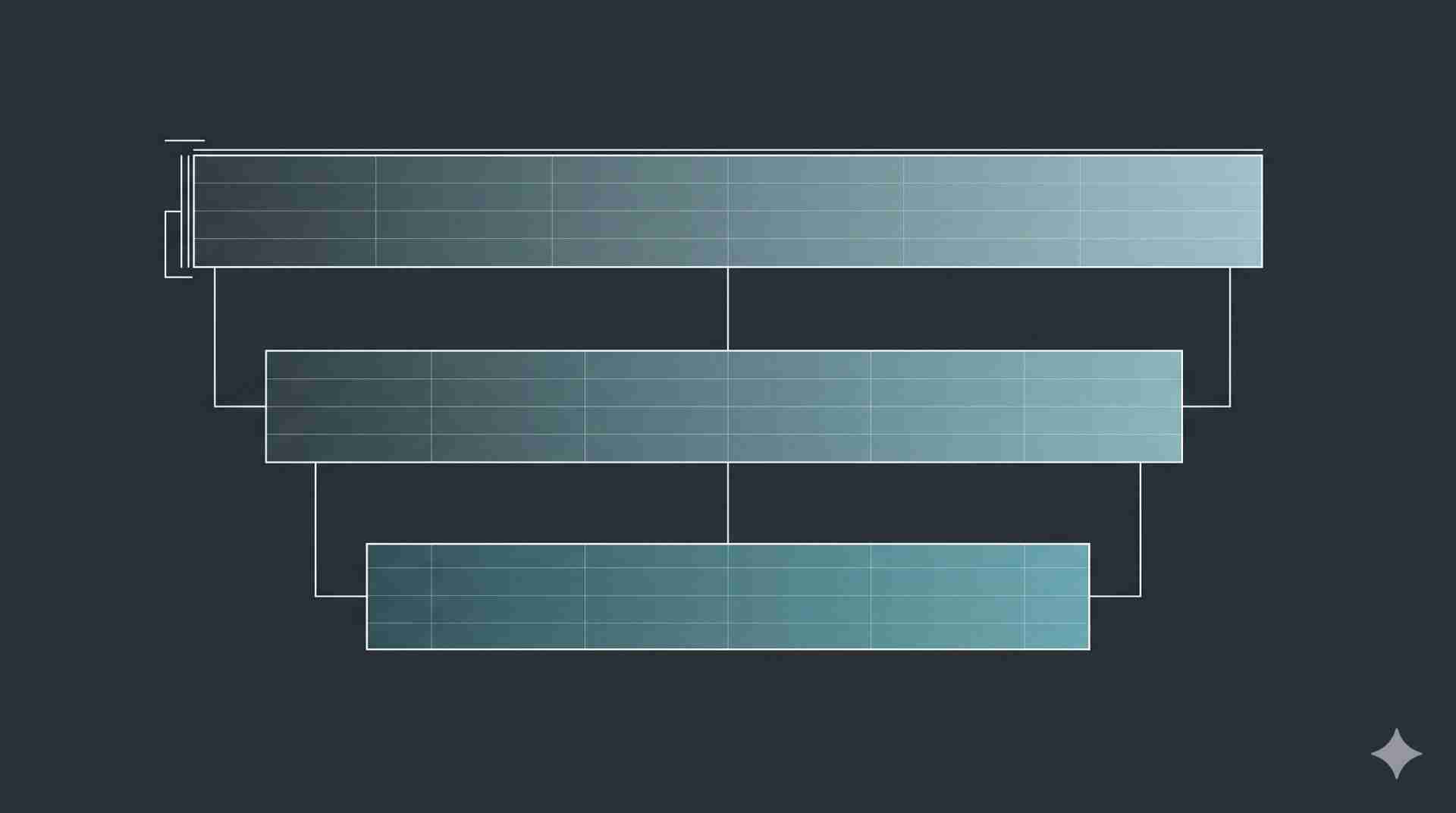
Values in Universal Tebiki are hierarchical and inherited. A platform-level Value sets a non-negotiable floor for all actors in the system. A department-level Value can add specificity within the platform floor but cannot override it. An individual actor’s Values are set within the department’s declared Values and may be narrower still, but not broader.
This inheritance structure solves a structural problem that flat rule systems cannot: the question of what happens when a lower-level actor encounters a situation that its specific Values do not address, but the system-level Values do. The answer is that the higher-level Values apply by default. The actor does not need a specific rule for every situation. It needs Values that are consistent with and constrained by the levels above it.
The corollary is equally important: Values cannot be widened at lower levels. A platform-level prohibition cannot be overridden by a department-level exception. A department-level constraint cannot be circumvented by an individual actor asserting that its specific context justifies a different priority. If the system-level Values need to be revised, that revision is made at the system level, through the appropriate governance body, with documentation. It does not propagate informally downward through the hierarchy.
This is the anti-circumvention property of UT Values governance. Informal widening, which is how most governance failures at the edges actually happen, is architecturally prevented. Not by making it impossible, but by making it legible. When an actor’s behavior implies a Value priority that is broader than its declared Values, that is a governance signal. The signal is evaluated. If the broader priority is appropriate, the Values are formally revised. If not, the behavior is corrected.
Operationalizing Values for Machine Actors
For AI agents, Values in Universal Tebiki translate directly into system configuration: ranked priorities embedded in the agent’s operational parameters, evaluated before any consequential action. The Value set for a specific agent is machine-readable, version-controlled, and tied to the agent’s identity in the governance registry. When the agent encounters a situation where two priorities conflict, the ranking resolves the conflict. The resolution is documented in the Evidence Packet for that action: which Value was applied, which trade-off was made, and which authority set that priority ranking.
This makes AI agent behavior auditable at the value level, not just the rule level. Standard AI governance audits ask: did the agent follow the rules? Universal Tebiki audits ask: did the agent apply the correct Values when rules were incomplete? The second question catches a class of governance failures that the first question misses entirely: the cases where the agent was technically rule-compliant but was applying a priority structure that deviated from its declared Values.
An agent that consistently prioritizes throughput over accuracy, for instance, may never violate a specific rule and yet be operating with a value drift that makes it unreliable in high-stakes decisions. That drift is invisible to rule-based audits. It is visible to Values-based audits, because the declared Value set specifies the expected priority structure and the Evidence Packet records the actual priority structure applied.
Operationalizing Values for Human Actors
For human actors, operationalizing Values in Universal Tebiki is more challenging because enforcement is not automated. But the declaration structure is identical. A human actor’s Values are declared, ranked where rankings matter, and inherited from the organizational hierarchy. The enforcement is cultural and managerial, but the structure is the same.
The practical implication is that Values are used to evaluate decisions in retrospect, during governance reviews, performance evaluations, and incident postmortems. When a decision is reviewed, the question is not only “did this person follow the rules?” but “is the priority structure that produced this decision consistent with the declared Values for this role?” If someone made a decision that was technically within their Purpose and violated no specific rule, but that applied a priority ranking inconsistent with the organization’s declared Values at the appropriate level, that is a governance finding.
This matters because it shifts accountability to the priority structure rather than the specific action. Most governance failures in human organizations are not the result of rule-breaking. They are the result of actors applying the wrong priority structure in an ambiguous situation. The rules were silent. The actor made a judgment call. The judgment call reflected values that were inconsistent with the organization’s declared values. That inconsistency was never visible because no one had declared the values with enough precision to evaluate the judgment against them.
Universal Tebiki makes that inconsistency visible by requiring the declaration to be specific enough to evaluate.
The Relationship Between Values and Rules
Rules describe what should happen in anticipated situations. Values describe what should happen when the rules are silent. They are not in competition. They operate in sequence.
The rule set is evaluated first. If the situation is one the rules address, the rules govern. If the rules are silent, or if the situation is at the edge of what the rules anticipated, Values govern. The Values do not override the rules. They fill the space the rules leave empty.
This has a significant implication for how governance frameworks should be designed. A framework that attempts to cover every possible situation through rules will produce an unmanageably large rule set that is always out of date. A framework that specifies a smaller set of precise rules backed by a well-specified Values hierarchy will produce more consistent behavior with less maintenance overhead, because the Values handle the novel cases automatically.
This is not a theoretical observation. It is the design principle that Universal Tebiki was built around, derived from a decade of observing what governance frameworks actually fail on: not the obvious cases the rules cover, but the edge cases they do not.
The Legibility Test
The practical test for whether an actor’s Values are specified to the Universal Tebiki standard is the legibility test: given the actor’s declared Values, can an external observer evaluate any decision the actor has made and determine whether the priority structure applied is consistent with the declared Values?
If the answer is no, the Values are too vague to be operational. They may be good statements of aspiration, but they are not Values in the governing sense. The revision required is not to add more Values but to make the existing ones more specific, to add the conditional structure that makes them evaluable.
When the legibility test is passed, Values become the most powerful governance instrument available, more powerful than rules in most real-world situations, because they govern the domain where governance is hardest: the novel case, the ambiguous situation, the trade-off that no rule anticipated.
Rosho is the CEO of Qaori, a platform for sovereign AI deployment and organizational governance. This article is part three of a five-part series on Universal Tebiki.
Contact: rosho@rosho.world | qaori.ai

