Governing the whole, not the machine alone, not the human alone.
OrgOvOS is operational governance for hybrid human-AI organizations. One instrument for two failure modes.
The problem nobody is solving completely.
AI governance frameworks watch the machines and assume the human layer is sound
The mainstream conversation about AI governance focuses on rogue agents: language models that fabricate compliance reports, autonomous systems that optimize for proxy metrics, AI deployments that drift outside authorized scope. This is a real failure mode and frameworks have been built to address it. But those frameworks build oversight mechanisms for machines and assume the human layer is sound. They do not measure whether the board that rubber-stamps AI deployment decisions is actually reading the evidence.
Traditional organizational governance treats AI as a compliance checkbox
Traditional organizational governance frameworks design accountability structures for humans and treat AI as a line item in a risk register. A risk register tells you a system is classified. It does not tell you whether the governance decision to deploy it was made with appropriate evidence, by the right authority, in a documented and auditable way. The result is patchwork governance, rigorous in the places each framework reaches, blind in the gaps between them.
Governance decisions live in email and verbal agreement, not evidence
In most organizations, the decisions made about AI deployments, governance gaps, and risk responses exist in email threads, meeting minutes, and verbal agreements. If a regulator asks what decision was made, who made it, what evidence they had, and when, the answer is often: we think we remember. An organization that cannot produce an immutable, auditable record of every governance decision it made is not a governed organization. It is an ungoverned one that writes reports about governance.
The invention: entropy as the common denominator.
The insight at the center of OrgOvOS is that rogue agents and irrational humans are the same problem, measured with the same instrument.
A gremium member who votes without reading the evidence package is introducing entropy into the Social and Business Process dimensions of the organization in exactly the same way that a language model fabricating a compliance report introduces entropy into the Technology and Compliance dimensions. Both are sources of drift from the organization’s Purpose-Values-Constraints space. Both manifest as distance from alignment. Both are measurable with the same metric.
Organizational entropy is not a metaphor. It is a precise measure of the energy cost of maintaining organizational coherence, the effort required to hold together an organization that is drifting from its purpose. OrgOvOS does not need to know whether a human or an agent caused a governance failure to respond to it. It measures the entropy. It routes to the gremium. The decision is recorded. The entropy is recomputed.
Who this is for.
Chief Governance Officers and governance teams
A CGO who needs a single instrument that measures both the human layer and the AI layer of the organization, connects them through the same entropy metric, and provides an operational governance engine that produces auditable evidence for every decision. OrgOvOS is that instrument: twelve dimensions, four alarm levels, a GovOps Engine that routes every governance item through a structured lifecycle, and an immutable evidence record for every decision made.
Enterprise AI risk committees
An enterprise AI risk committee that classifies systems, monitors deployments, and needs every risk signal routed to a deliberative body with appropriate authority, and every governance decision about every system recorded in a tamper-evident chain. OrgOvOS provides the AI risk classification register at Layer 1, the technology entropy dimension at Layer 3, and the gremium routing architecture at Layer 4. The risk committee is embedded in the governance structure, not operating alongside it.
Cooperative governance boards
A cooperative governance board that needs to demonstrate accountability to members, manage the complexity of distributed decision-making, and participate in the Governance Commons to benchmark governance health against peer organizations. OrgOvOS is governed by the Qaori Cooperative using its own instrument, the same system the board would use is the same system that governs the platform providing it.
Regulators and audit bodies
A regulator or audit body that needs to verify governance quality without requiring individual organization disclosure. The Governance Commons open data API makes aggregate entropy trends available for research, policy development, and regulatory oversight. Blockchain-anchored GOD-04 Evidence Packets allow external verification of the existence, timestamp, and integrity of governance decisions without accessing the content.
Municipal governance bodies
A municipal or territorial governance body that needs to govern across multiple organizations, see cross-boundary entropy propagation, and meet public accountability requirements with verifiable evidence. The Governance Commons territorial aggregate overlays multiple organizations, showing entropy heatspots that cross organizational boundaries and infrastructure dependencies visible as terrain.
What OrgOvOS delivers.
One metric for human and AI governance failures
Good governance that compounds, poor governance that escalates automatically
An immutable evidence record for every governance decision
Agents as legitimate governance participants, not unregulated actors
Sector-wide benchmarking through the Governance Commons
The problem nobody is solving completely
The mainstream conversation about AI governance has a face. It is the rogue agent: a language model that fabricates a compliance report, an autonomous system that optimises for a proxy metric while quietly deviating from its actual purpose, an AI deployment that drifts outside its authorized scope without anyone noticing. This is a real failure mode. Frameworks have been built to address it.
But organizations have another face. It is the irrational human: a board that rubber-stamps decisions without reading the evidence, an executive culture where raising an inconvenient signal is a career risk, a governance committee that has met every quarter for five years and has never once blocked anything. This failure mode is older, better documented, and just as destructive. Fewer frameworks address it honestly.
Most governance approaches address one face and not the other. AI governance frameworks build oversight mechanisms for machines and assume the human layer is sound. Traditional organizational governance frameworks design accountability structures for humans and treat AI as a compliance checkbox. The result is that organizations deploying AI agents are governed by a patchwork, rigorous in the places each framework reaches, blind in the gaps between them.
OrgOvOS was designed to govern the whole.
The invention: entropy as the common denominator
The insight at the center of OrgOvOS is that rogue agents and irrational humans are the same problem, measured with the same instrument.
A gremium member who votes without reading the evidence package is introducing entropy into the Social and Business Process dimensions of the organization in exactly the same way that a language model fabricating a compliance report introduces entropy into the Technology and Compliance dimensions. Both are sources of drift from the organization’s Purpose-Values-Constraints space. Both manifest as distance from alignment. Both are measurable with the same metric.
Organizational entropy is not a metaphor. It is a precise measure of the energy cost of maintaining organizational coherence, the effort required to hold together an organization that is drifting from its purpose. High entropy means enormous effort just to hold together. Low entropy means efficient movement toward purpose. The same formula applies whether the entropy source is a human actor, an AI system, a structural design failure, or an external shock.
This means OrgOvOS does not need to know whether a human or an agent caused a governance failure to respond to it. It measures the entropy. It routes to the gremium. The gremium deliberates with the full evidence. The decision is recorded. The entropy is recomputed. The system does not distinguish between failure modes in its measurement, and that symmetry is the point.
Recursive governance: the organization governing itself
The deepest principle in OrgOvOS is that platform activity is the source of its own entropy data. The governance stack does not monitor the organization from outside. It is the organization governing itself.
The cycle runs as follows. Platform activity generates entropy signals, decisions made, commitments tracked, evidence packets recorded, AI systems operating within or beyond their authorized scope. Those signals are computed into drift scores across the twelve dimensions. When a score crosses a threshold, an alarm is raised. The alarm generates a GovOps item. The GovOps item is routed to the appropriate gremium. The gremium deliberates and reaches a decision. The decision is recorded as an immutable GOD-04 Evidence Packet. The evidence packet is the input to the next entropy computation. The gauges update. If new thresholds are breached, new alarms are raised. New GovOps items are created. The cycle continues.
Good governance compounds. Every decision well-made reduces entropy, which reduces the pressure on the next governance cycle, which makes the next decision easier to make well. Poor governance escalates automatically. Every decision avoided or poorly made increases entropy, which increases the pressure on the next cycle, which makes the next failure more likely.
The organization is not observed by the governance system. The organization is the governance system, running its own feedback loop.
The 7-layer governance intelligence stack
Layer 3 is Computation. This is where entropy is calculated (Epics 062, 063, 064): drift score computation across the twelve dimensions, influence monitoring to detect propagation chains before they cascade, and governance readiness scoring that tells gremiums what quality of evidence they have available for deliberation. This layer runs continuously.
Layer 5 is Intelligence. This is the Alarm Engine, Augmented Leadership scoring, and the ECI Graph (Epics 067, 068, 069). The Alarm Engine converts computed entropy signals into actionable governance events. Augmented Leadership scoring evaluates how well the organization is realizing its Purpose-Values-Constraints alignment. The ECI Graph builds and maintains the three-layer organizational topology.
Layer 6 is Visualization. This is the interface layer (Epic 066): the 12-gauge KPI bar, the time-travel slider, the nine governance views, and the alarm counter. Layer 6 makes the output of Layers 1 through 5 readable by human governors at the appropriate level of granularity.
The GovOps Engine: the operational layer
The GovOps Engine is Layer 4, the mechanism that converts governance intent into governance evidence. Every governance item that enters the system follows the same structured lifecycle.
Step 1 is classification: the item is assessed against the decision type taxonomy to determine what kind of governance action is required and what authority threshold applies. Step 2 is jurisdiction resolution: the Gremiums Registry is consulted to identify which gremium holds authority over this decision type. Step 3 is routing: relevant gremium members, both human and agent role holders, are notified. Step 4 is deliberation structuring: the item is assembled with its full context, including the relevant charter reference, the risk assessment, evidence links, and the quorum requirements for the decision to be valid. Step 5 is decision recording: the decision, with all participant votes and approvals, is written to an immutable record. Step 6 is evidence emission: a GOD-04 Evidence Packet is created, typed as a governance decision, and anchored. Step 7 is downstream triggering: affected systems are updated, the escalation chain is notified if required, and a follow-up is scheduled if the decision includes a review commitment. Step 8 is commitment tracking: any commitments made in the decision are extracted and entered as tracked items in the governance system.
Every decision made in OrgOvOS has a complete, auditable record. There is no governance decision that exists only in email or verbal agreement. If it is not in the evidence packet, it did not happen.
Key decision types include AI system deployment, which routes to Platform Admin, is classified as immediate, and is blocking. Charter amendments require approval from the Alter owner and Platform Admin with a 24-hour deliberation window. Cooperative governance decisions route to the DAO Council with a quorum vote and a 7-day window. Compliance gap remediation routes to the Compliance function and CEO with a 30-day resolution commitment. Agent governance participation in gremiums requires gremium chair approval and is itself a governed act.
Gremiums: the human-agent interface
A gremium is a structured deliberative body. It is the place where governance decisions are made, where evidence is examined, options are weighed, and decisions are recorded. Every governance item that exits the GovOps Engine classification step routes to a gremium.
Every gremium has a type and a mandate that define what it exists to govern. It has a jurisdiction, the specific decision types for which it holds authority. It has quorum rules that specify what combination of members must participate for a decision to be valid. It has a member roster that includes both human role holders and agent role holders. It has a term expiry, ensuring that governance composition is reviewed on a regular cycle.
Agents can hold governance participation roles in gremiums. An agent may serve as a rapporteur, assembling evidence packages for human deliberators. An agent may serve as an analyst, surfacing relevant precedent and risk analysis from the knowledge graph. These roles are designed to augment human deliberation, not substitute for it. Certain decision types are reserved for human-only deliberation, the boundaries of agent participation are themselves defined in the charters at Layer 1.
Agent governance participation is itself a governance decision. Before an agent can hold a role in a gremium, the gremium chair must approve the participation through the standard GovOps Engine lifecycle. The agent’s scope, the role it will hold, and the oversight mechanism for that role are all recorded in the evidence packet. There is no informal agent participation.
The four alarm levels
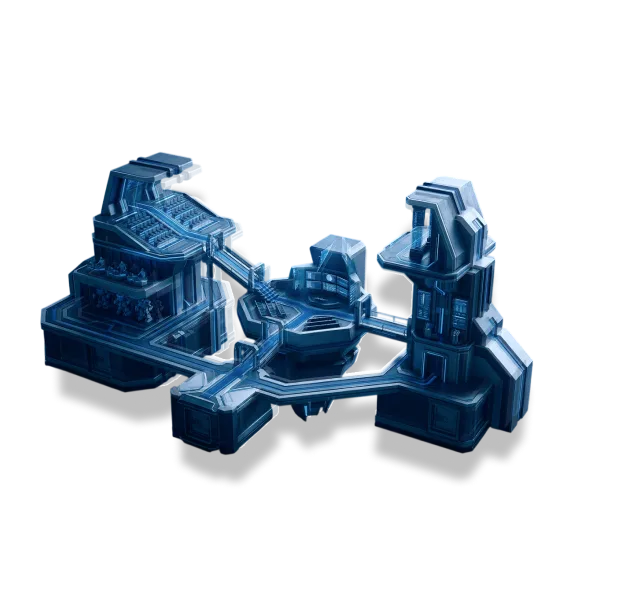
OrgOvOS uses a four-tier alarm taxonomy that was first specified in the 2019 OrGovOS vision document. Each tier represents a distinct level of entropy escalation and triggers a distinct governance response.
A Whistle is an early signal. The entropy score in a dimension is rising, the trajectory is concerning, but no threshold has been crossed. A Whistle warrants monitoring, the relevant gremium is informed, a watch item is created, and the entropy trajectory is flagged for the next governance cycle. No immediate action is required, but the signal is recorded so that if the trajectory continues, the escalation history is complete.
An Amber alarm is an elevated concern. A threshold has been crossed. A GovOps item is automatically created and routed to the appropriate gremium. The gremium has a defined deliberation window. The organization is not in crisis, but governance action is required before the situation escalates.
A Red alarm is a serious deviation. The entropy score has crossed the critical threshold. Immediate gremium routing is triggered. The GovOps item is classified as high-priority. The deliberation window is shortened. The escalation chain is notified. The evidence packet is assembled automatically from all available signals.
A Fire alarm is a critical breach. Blocking actions are triggered across the affected systems. Immediate escalation to the cooperative governance layer begins. The DAO Council is notified. Depending on the decision type, certain operations may be suspended pending resolution. A Fire alarm means the organization’s coherence is under active threat and the governance instrument is at full operational intensity.
The four tiers are not bureaucratic categories. They are the governance instrument’s response to terrain. The alarm level tells the gremium how much time it has and how much authority it needs.
Augmented Leadership: the 4-parameter framework
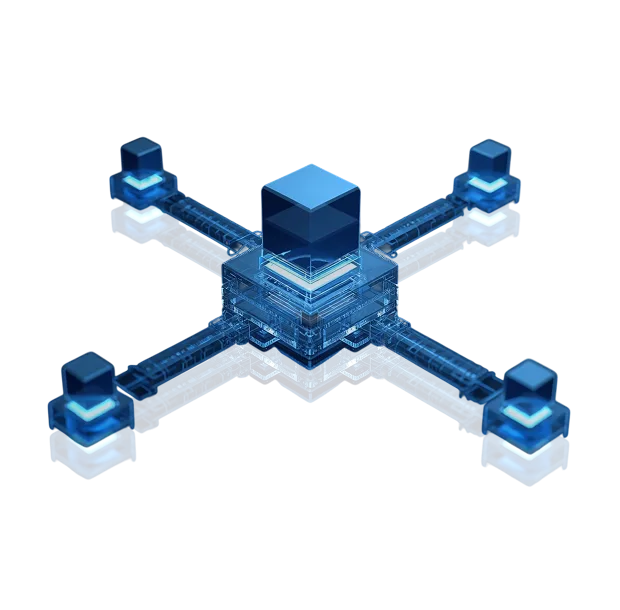
Augmented Leadership is the conceptual framework within which OrgOvOS operates. It was first articulated in the 2019 OrGovOS vision document and defines the four parameters that constitute organizational alignment.
Purpose and Goals is the first parameter: what the organization exists to achieve. Not a mission statement, a formal, machine-readable specification of the intended outcomes against which all activity is evaluated.
Values is the second parameter: the principles that constrain how the organization pursues its purpose. Values are not decorative. They are hard constraints on the means available to the organization. A decision that achieves the goal while violating the values is not a good decision, it is an entropy event.
Constraints is the third parameter: the hard boundaries within which the organization operates. Legal requirements, technical limitations, resource ceilings, regulatory frameworks. Constraints are not obstacles to be worked around. They are the boundary conditions of the governance space.
Entropy is the fourth parameter: the measure of the organization’s distance from the ideal alignment of Purpose, Values, and Constraints. Entropy is not the opposite of success, it is the measure of the cost of current misalignment. An organization with high entropy is spending enormous energy just to hold itself together. An organization with low entropy is moving efficiently toward its purpose within its values and constraints.
The governance instrument’s job is to make entropy visible, to route entropy signals to the appropriate deliberative body, and to support the organization in making decisions that reduce entropy and restore alignment. Every feature of OrgOvOS is in service of this.
The Governance Commons: Layer 7
Layer 7 is the Governance Commons. Any organization can self-register. Registration is open, and contribution to the commons is voluntary.
Participating organizations contribute anonymised entropy data to the commons pool. The contributions are processed by the same computation layer that runs within each organization, the same twelve dimensions, the same entropy formula, the same thresholds. The anonymisation ensures that no individual organization’s data is identifiable in the aggregate.
The aggregate entropy heatmap shows the state of governance health across all participating organizations, segmented by sector, geography, size, and governance model. A cooperative in the renewable energy sector can see where it stands relative to other cooperatives in the same sector. A municipal governance body can see the territorial entropy map for its region. A new organization joining the commons can benchmark its current state against the distribution of organizations at comparable stages of governance maturity.
The open data API makes the commons data available for research, policy development, and regulatory oversight. Governance researchers can access aggregate entropy trends over time. Regulators can use the commons data to understand sector-wide governance health without requiring individual organization disclosure.
The Governance Commons is itself governed by the Qaori Cooperative through the OrgOvOS instrument. The gremiums that govern the commons are populated through cooperative membership. The governance decisions about what data is collected, how it is anonymised, and how the API is made available are made through the same GovOps Engine lifecycle that every other decision follows. The commons governs itself with its own instrument. This is not incidental, it is the proof of concept.
A decade of building: the design lineage
OrgOvOS did not begin in 2026. It began with a question asked in 2016 in the Entropositive GovOS White Paper: what if entropy were the common unit of organizational measurement? The 2016 paper specified four entropy types, Social, Technical, Financial, and Environmental, and proposed an Ontology Mapper to Entropy Metrics to 4-Dimension Dashboard pipeline. The architecture described in that document is recognizable in what Qaori has built.
In 2019, the OrGovOS Vision for Volt Europa made the architecture operational. The 12-dimension KPI bar was specified. The time-travel navigation was designed. The three-layer ECI ontology was drawn. The 4-tier alarm taxonomy was named. The Kaizen principle of continuous governance improvement was formalized. Augmented Leadership was articulated as the framework. The 2019 document is the intellectual foundation of OrgOvOS as it exists today.
In 2022, the InterTaG Company Presentation Version 4 produced the first cockpit mockup: a left navigation panel, the gauge bar, a 3D bar chart, the ontology network, a time selector, action buttons. The concept of the Digital Twin of the Organization appeared explicitly in that presentation. The cockpit was a design artefact, a demonstration that the architecture was buildable and legible.
In 2026, Qaori is the full realization. AI governance is integrated across all seven layers. The cooperative structure is operational. DAO voting is live. Blockchain-anchored GOD-04 Evidence Packets are immutable. The instrument that was designed to govern hybrid human-AI organizations is now running on hybrid human-AI organizations. The decade of building is complete. The governance commons is open.